

Reaching alternative futures with prefigurative politics
If you have an appetite for a better food system, you’re not alone.
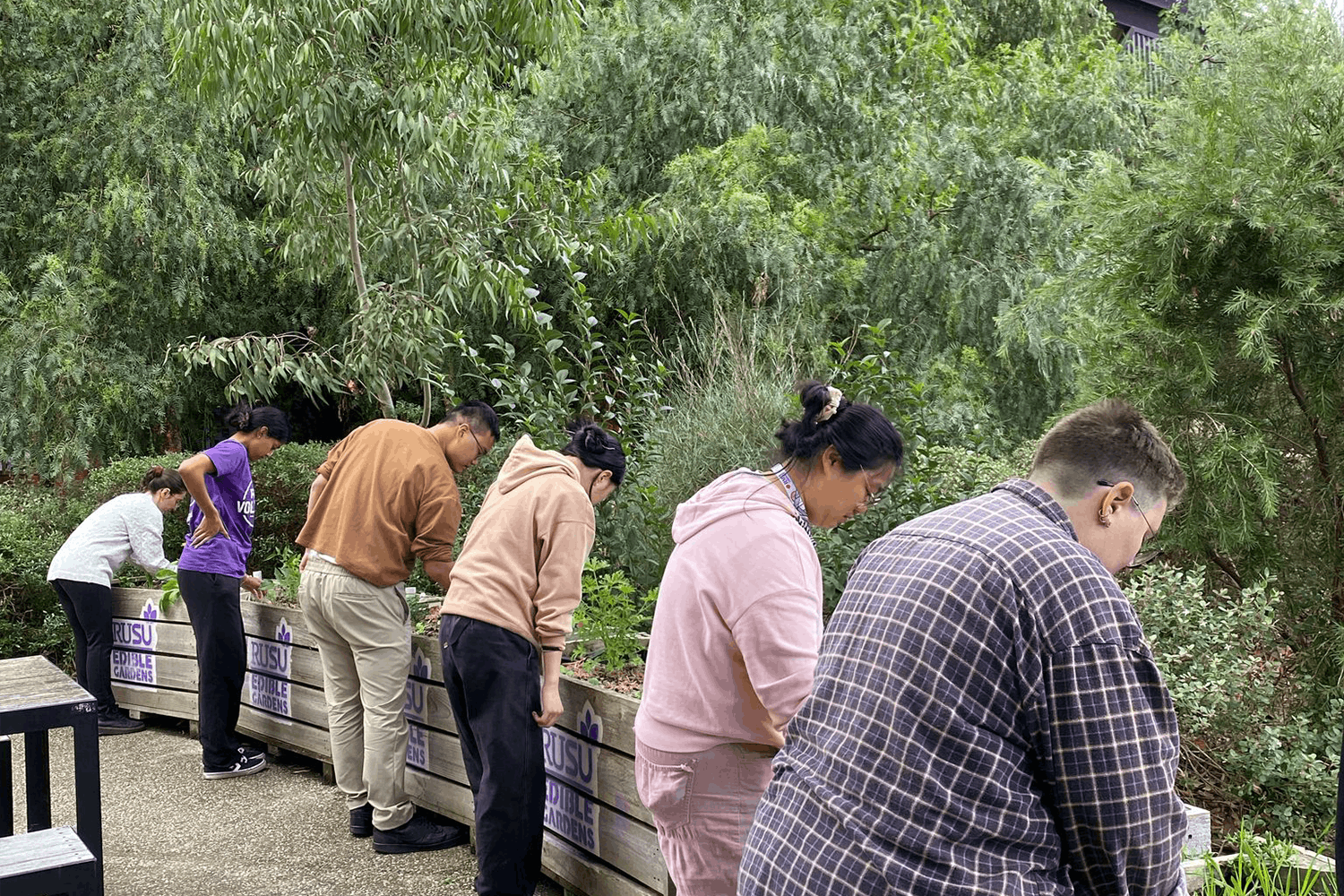
Many of us are united by a shared vision for how a future food system might look: one in which delicious, healthy food is recognised and treated as a human right, rather than a commodity. However, in the face of widening economic inequality, supermarket price gouging and chronic food waste in Australia and beyond, it often feels like our efforts towards creating a better future for food systems are futile.
While these grievances are legitimate and deserving of our attention, I believe they can be complemented – perhaps even pacified – by a simple approach to change-making: one that allows us to explore how everyday actions might also possess transformative potential. That approach is called prefigurative politics.
“It is about acting as if this future you want to see is already here. In prefigurative politics, social change is understood as something to be practiced in the now, not merely a vision for the future.”
Prefigurative politics is a strategy and framework used by some people who aspire towards alternative futures. The strategy involves acting out the social and material relations envisioned for an alternative future. In other words, it is about acting as if this future you want to see is already here. In prefigurative politics, social change is understood as something to be practiced in the now, not merely a vision for the future.
There are many ways we might prefigure elements of their desired food system. For example, food relief charities might implement a ‘no questions asked’ ethos, meaning that all attendees can freely enjoy greater access to food without attached stigmas of shame or deservingness. Another example might include a local community vegetable garden in which people work together to choose what to plant, how to grow, distribute and share what is produced. On a small scale, this structure would be enacting the food sovereignty principles of peasant-led farmer movements around the world, in a country and context where food production and consumption is typically dictated by corporate interests.
Both examples described here possess prefigurative elements: they intentionally reject current norms in our food system whereby food is a commodity to be bought and sold by those who can afford it. Here, people prefigure social, spatial and economic relationships which involve equality, participation and community-building.
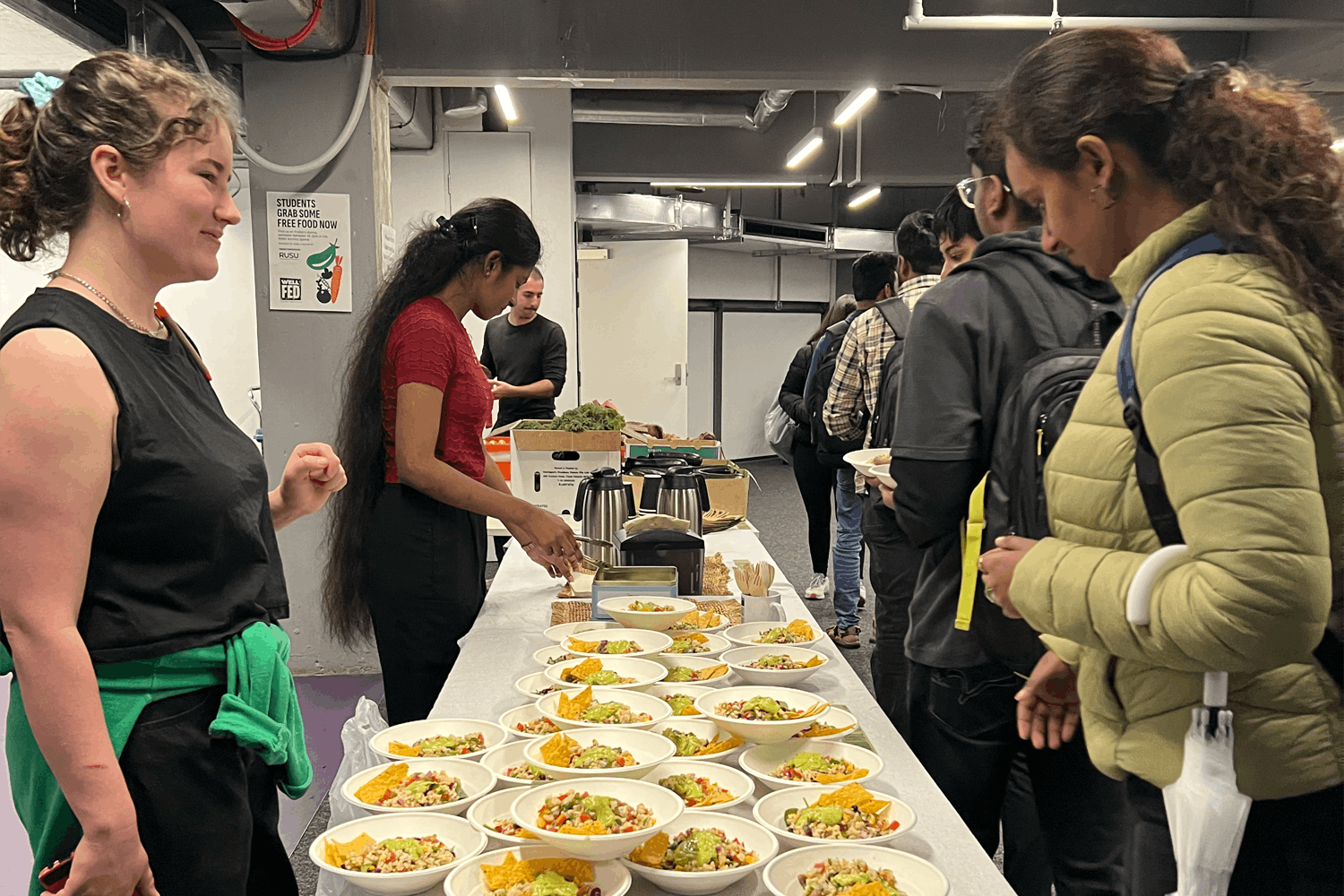
The Just Food Collective team at Well Fed at RMIT
The power of prefigurative politics rests largely in its capacity to demonstrate how an alternative system might work in practice. By offering concrete examples of a desired future in the present, a prefigurative political approach can help everyday people to make societal transformation feel more realistic and achievable. This process can then help to shift broader societal attitudes away from the idea that undesired aspects of our society – such as our unequal and commoditised food system – must endure because it’s “always been this way”. Prefigurative politics is often described as the bringing together of the ‘means’ and ‘ends’ of change-making, and opens up a world where everyone participates in future-building, without needing the permission of a government or even membership of a political movement or party.
“These processes of experimentation facilitate the emergence of material, social and ideological spaces from which we can balance and negotiate our priorities and continuously learn and rethink how a better world might actually look.”
The basis of prefigurative political action is experimentation. Performing alternative relationships and ideas allows us to figure out what does and does not work in practice and to learn what tensions might arise. Practices such as providing free food, no questions asked, or organising non-hierachical community gardens might seem chaotic or uncertain at times; we might make incorrect projections on attendance numbers or discover points of tension with other people. Importantly though, these experimental processes of trial, error and contention are vital for prefiguring a better world. These processes of experimentation facilitate the emergence of material, social and ideological spaces from which we can balance and negotiate our priorities and continuously learn and rethink how a better world might actually look.
For instance, the process of running and participating in a community garden or kitchen is an ever-evolving experiment to learn more about the types of plants, equipment, skills and styles of communication and leadership that work well. It also allows us to continually nurture local and broader social networks as a means for seeing how an alternative, more localised and horizontal food system might work in practice. As we endeavour to dismantle the current corporate food system, we must figure out what we ought to replace it with and make sure that these alternatives are actually viable. By acting as if our alternative future is already here, we are actively pre-figuring this future.
In summary, while we may at times feel overwhelmed or drained by the state of our corporate-dominant food system and our own place in having a say in how and what we eat, and at what price- we can offer ourselves some solace by thinking about and engaging intentionally with ideas of prefigurative politics. This strategic approach to change-making reminds us that our food system – and all aspects of our society – are never fully complete but are instead in a constant state of change and becoming. A prefigurative political lens reminds us that we can be that change.
Further reading on prefigurative politics:
Boggs, C. (1977). Revolutionary process, political strategy, and the dilemma of power. Theory and Society, 4(3), 359–393. https://doi.org/10.1007/BF00206985
Jeffrey, C., & Dyson, J. (2021). Geographies of the future: Prefigurative politics. Progress in Human Geography, 45(4), 641–658. https://doi.org/10.1177/0309132520926569
Monticelli, L. (2021). On the necessity of prefigurative politics. Thesis Eleven, 167(1), 99–118. https://doi.org/10.1177/07255136211056992
Monticelli, L. (Ed.). (2022). Prefigurative politics within, despite and beyond contemporary capitalism. In The future is now (pp. 15–31). Bristol University Press. https://doi.org/10.51952/9781529215687.ch001
Yates, L. (2015). Rethinking prefiguration: Alternatives, micropolitics and goals in social movements. Social Movement Studies, 14(1), 1–21. https://doi.org/10.1080/14742837.2013.870883
Yates, L. (2021). Prefigurative politics and social movement strategy: The roles of prefiguration in the reproduction, mobilisation and coordination of movements. Political Studies, 69(4), 1033–1052. https://doi.org/10.1177/0032321720936046